

When Life Gives You Tangerines With English Subtitles
Introduction
When Life Gives You Tangerines With English Subtitles When Life Gives You Tangerines is a heartwarming Korean drama that blends romance, family, and the pursuit of dreams against the breathtaking backdrop of Jeju Island. With its poetic title, the drama symbolizes resilience, hope, and the sweetness hidden within life’s struggles—just like the tangy fruit that thrives in Jeju’s soil. The series aired with English subtitles, allowing international audiences to enjoy its depth, humor, and emotional resonance.

The story follows Han Soo-jin, a young woman who once dreamed of becoming a world-famous chef, but whose life took unexpected turns. Returning to her hometown in Jeju after years in Seoul, she encounters old friendships, unresolved wounds, and a mysterious newcomer whose presence changes everything. This drama explores the idea that sometimes life does not give us lemons, but tangerines—bittersweet but still filled with possibility.
When Life Gives You Tangerines Official Trailer Netflix
Setting the Stage: Jeju Island
The drama opens with sweeping shots of Jeju Island—blue oceans, green fields, and endless tangerine orchards glowing under the sun. Soo-jin returns to her family’s farm after losing her job in a prestigious Seoul restaurant. Her father’s health has declined, and the farm needs someone to take care of it. Though disheartened, Soo-jin tries to find meaning in this new chapter, convinced that her dreams are slipping away.
Her family is warm but also burdened by debts and generational struggles. Her mother represents tradition, clinging to old ways of farming, while her younger brother resents the family business and wants to escape to Seoul. These dynamics give the series its family-centered core, showing how ties of love and duty can weigh heavily, but also give strength.

The Male Lead: Kang Joon-ho
Enter Kang Joon-ho, a reserved but kind-hearted man who rents a small house near Soo-jin’s orchard. Joon-ho is a Seoul architect who mysteriously left his promising career. He initially appears distant, but Soo-jin slowly discovers his warmth, patience, and secret pain. Joon-ho’s reason for moving to Jeju is gradually revealed: he lost someone dear to him in a tragic accident, and the city became unbearable.
The relationship between Soo-jin and Joon-ho begins with misunderstandings and humorous clashes. Joon-ho accidentally ruins a crate of harvested tangerines, leading to Soo-jin’s fiery temper. Yet, their interactions slowly evolve into mutual support. While Soo-jin teaches him the value of slow, rural life, Joon-ho helps her rediscover confidence in her culinary dreams.
Secondary Characters
The drama is rich with colorful side characters:
-
Grandmother Hye-ja, a wise, sharp-tongued woman who symbolizes Jeju’s traditions. She serves as Soo-jin’s mentor, reminding her of resilience and the importance of roots.
-
Min-kyu, Soo-jin’s childhood best friend, now a local café owner, who secretly harbors feelings for her. His warm humor often masks his quiet longing.
-
Eun-ji, Soo-jin’s younger cousin, a social media influencer obsessed with city life, who provides comic relief but also raises questions about modern values versus tradition.
-
Mr. Park, the stern farm association leader, who pressures Soo-jin’s family to sell their land. He represents the capitalist threat to Jeju’s small farmers.
These characters enrich the drama, making it more than just a love story, but also a tapestry of community life.
Themes of Love and Healing
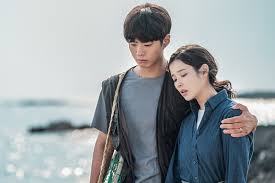
The central theme of When Life Gives You Tangerines is healing—through love, food, and acceptance. Soo-jin and Joon-ho both carry scars: hers from failure and self-doubt, his from grief and guilt. Their relationship is not rushed; it grows naturally, like fruit ripening on a tree. With each episode, viewers see them share meals, laughter, and vulnerable conversations.
Food plays a symbolic role throughout the drama. Soo-jin experiments with recipes using Jeju’s tangerines, turning the humble fruit into gourmet creations. These dishes become metaphors for her growth: transforming bitterness into sweetness, and loss into new beginnings. One of the most memorable scenes is when she prepares a tangerine-infused dish for Joon-ho, which reminds him of a meal his late loved one once cooked. Tears flow as both characters realize that food connects the past and present.
Conflict and Growth
No Korean drama is complete without conflict. Soo-jin’s farm is at risk of being sold due to debts, and she must decide whether to fight for her family’s legacy or return to Seoul to chase her culinary ambitions. Meanwhile, Min-kyu confesses his feelings, creating tension between him, Soo-jin, and Joon-ho.
Joon-ho’s hidden past also resurfaces when his former colleagues visit Jeju, urging him to return to architecture. He faces a dilemma: stay with Soo-jin in her humble world or return to the fast-paced life he once knew. These conflicts test the characters’ choices and reveal their true desires.

Climactic Turning Point
The climax comes during the annual Jeju Tangerine Festival. Soo-jin decides to showcase her unique dishes, combining tradition with modern creativity. However, a rival chef from Seoul tries to sabotage her, spreading rumors and mocking her rural background. With Joon-ho’s encouragement, Soo-jin overcomes her fears and delivers a heartfelt presentation. The crowd is moved, and Soo-jin finally earns recognition not just as a cook, but as someone who bridges Jeju’s heritage with innovation.
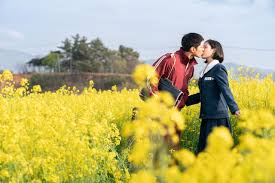
At the same time, Joon-ho confronts his grief, realizing that moving forward does not mean forgetting the past. He confesses his love to Soo-jin beneath the glowing lanterns of the festival, a moment both tender and triumphant.
Resolution
The final episodes tie together love, family, and dreams. Soo-jin decides to stay in Jeju, opening her own fusion restaurant that highlights local produce, especially tangerines. Her family slowly unites, with her brother helping in the restaurant instead of leaving for Seoul. Joon-ho chooses to remain by her side, designing the restaurant’s interior, symbolizing a merging of their talents.
The series closes with a symbolic scene: Soo-jin and Joon-ho walking through the orchard at sunrise, hands intertwined, as they taste freshly picked tangerines. The taste is bittersweet, just like life, but their smiles show that they have found peace, love, and a future worth nurturing.
Why This Drama Stands Out
When Life Gives You Tangerines is not a flashy melodrama filled with excessive twists. Instead, it’s a quiet, heartfelt journey that resonates deeply with viewers. Its strengths lie in its picturesque cinematography, the symbolism of food and farming, and its emphasis on community. The use of English subtitles allowed international fans to experience the poetic dialogues, witty banter, and emotional monologues without losing nuance.
The drama reminds us that while life may not always give us what we expect, it offers us something meaningful if we are willing to embrace it. Much like the sweetness hidden in a tangerine, joy can be found in resilience, love, and rediscovering one’s roots.
Conclusion
With its tender storytelling, relatable characters, and a perfect balance of romance and slice-of-life charm, When Life Gives You Tangerines has become a memorable Korean drama for audiences worldwide. It is more than a love story—it is a meditation on healing, the importance of family, and the courage to transform life’s bitterness into something beautiful.
For viewers who watch with English subtitles, the series delivers universal messages of hope and belonging, proving that no matter where we come from, we can all find sweetness in life’s tangerines.
