

Korean Drama Low Life With English Subtitles
A Story of Survival, Redemption, and Hope
1. The Fall of Ji-hoon
Korean Drama Low Life With English Subtitles “Low Life” begins with a breathtaking view of Seoul at dawn. Ji-hoon (27), once a promising law student, sits on a rooftop surrounded by the decaying beauty of the city. Once destined for success, Ji-hoon’s world crumbled when his father’s business collapsed, plunging the family into crippling debt. His mother’s illness drained every penny, and when she passed away, Ji-hoon was left alone with nothing but regret. The debts mounted, and the loan sharks came calling. The promising student who dreamed of becoming a lawyer is now a food delivery rider, scraping by just to stay alive.
The camera captures his isolation—rain-soaked alleys, flashing neon lights, and endless streets where he rides through Seoul’s underbelly. His phone buzzes constantly with debt reminders, while a message from his ex-girlfriend Eun-seo (25) warns him that the loan sharks are searching for him. Ji-hoon lights a cigarette and murmurs, “Maybe disappearing would be easier.” His words echo through the wind—marking the beginning of his descent into the life of a man the world calls “low life.”
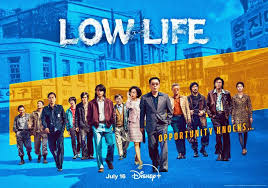
2. A Chance Encounter
One rainy night, Ji-hoon delivers food to a luxury apartment in Gangnam. There, he meets Yoon Hye-jin (30), a strict and fearless prosecutor known for her moral integrity. To his shock, she was once his university mentor—the same woman who had praised his intelligence years ago. Hye-jin opens the door, visibly surprised to see her former student standing before her in a delivery uniform.
Hye-jin: “You’re late.”
Ji-hoon: “Traffic was bad.”
Hye-jin: “There’s always traffic. Don’t make excuses.”
Her tone is cold, but when she notices his trembling hands and bruised knuckles, her stern gaze softens. Ji-hoon leaves quietly, but that brief encounter sparks something in both of them—her curiosity, his shame. Later, Hye-jin sits alone in her apartment, remembering the brilliant student who once argued that “justice means giving people the chance to change.” She realizes that Ji-hoon might not be beyond saving after all.
3. The Debt Trap
Meanwhile, Ji-hoon’s debts continue to suffocate him. His childhood friend Min-jae (28), now working as an enforcer for a feared loan shark named Mr. Kang, warns him that his time is almost up. Min-jae gives him a fake ID and tells him to hide for a while. But Ji-hoon refuses. “I’m tired of running,” he says. He returns to work, haunted by guilt and fear, yet determined to face the life he’s been given.
In a gritty montage, Ji-hoon rides through Seoul’s endless rain, delivering food to the wealthy who barely look at him. Each home he visits reveals a new world—the comfort of luxury, the emptiness of excess, and the indifference of those who never see the people serving them. The music, a haunting piano score, underscores his loneliness.
4. The Connection Restored
Hye-jin, investigating a massive loan-sharking network, discovers that Mr. Kang, the man controlling Seoul’s underground debt system, is the same one threatening Ji-hoon. Realizing the connection, she decides to find Ji-hoon again. When she does, she offers him a chance at redemption.
Hye-jin: “Help me take Kang down. You know his men. You know his routes.”
Ji-hoon: “And if I fail?”
Hye-jin: “Then you’ll die trying to do something right.”

It’s a dangerous offer—but for the first time in years, Ji-hoon feels a reason to fight. He agrees to go undercover as an informant. The next series of scenes shows Ji-hoon secretly recording conversations, delivering cash to Kang’s operations, and reporting everything back to Hye-jin. The tension grows with every episode as Kang’s men begin to suspect him.
5. The Betrayal and the Confrontation
Kang eventually discovers Ji-hoon’s betrayal. In a chilling scene, Ji-hoon is dragged into an abandoned warehouse. The air is thick with cigarette smoke and menace. Kang circles him like a predator.
Kang: “You really thought you could outsmart me?”
Ji-hoon: “I didn’t want to outsmart you. I wanted to stop you.”
Kang: “Low life like you will always crawl. That’s what you are.”
Ji-hoon: “Even dirt can bloom when it rains.”
The line becomes the show’s defining quote—symbolizing hope in despair. Just as Kang prepares to shoot Ji-hoon, police sirens blare outside. Hye-jin leads the raid, storming the building. A fierce fight breaks out. Ji-hoon, despite his injuries, lunges at Kang to protect Hye-jin and gets shot in the shoulder. Kang is finally captured, and the illegal network crumbles.

6. Redemption and Recovery
The next morning, Ji-hoon wakes up in a hospital bed. His arm is bandaged, and the room is filled with sunlight. Hye-jin sits beside him, silent but visibly relieved.
Ji-hoon: “Did we win?”
Hye-jin: “We survived. That’s enough.”
Ji-hoon: “I thought I was done for.”
Hye-jin: “You were reborn.”
She hands him an envelope—a rehabilitation program for ex-offenders and debt victims. Ji-hoon hesitates, unsure he deserves another chance. Hye-jin’s voice softens: “Justice isn’t just punishment. It’s the chance to rise again.” Moved, Ji-hoon accepts.

7. A New Beginning
Months pass, and Ji-hoon’s transformation unfolds slowly but steadily. He works part-time at a youth center, mentoring troubled teens. The once-broken man begins to rebuild his identity, no longer hiding from his past. Hye-jin visits occasionally, always professional but quietly proud. Their connection grows into mutual respect—an unspoken bond between two people who saved each other in different ways.
The show’s emotional climax comes in its final scene. Ji-hoon stands once again on the rooftop where the story began. This time, he’s clean-shaven, confident, and dressed in a neat delivery uniform. The sun rises behind him, painting the city gold. He looks out over Seoul and smiles faintly.
Ji-hoon (voiceover): “They called me low life. Maybe I was. But even from the lowest ground, you can still reach for the sky.”
The camera pans upward, fading into the soft hum of city life—a symbol of endless struggle and quiet hope.
8. Themes and Impact
“Low Life” isn’t just a story about crime and survival—it’s a profound exploration of redemption, social inequality, and the resilience of the human spirit. Ji-hoon represents those forgotten by society—the invisible people who fight silent battles every day. Hye-jin embodies the moral struggle of the justice system, torn between the law and compassion. Together, they show that redemption isn’t about erasing the past but learning to rise from it.
The English subtitles enhance the depth of every emotional exchange—the pauses, the silences, and the subtle heartbreak. Viewers around the world resonate with its universal message: that even in life’s lowest moments, there is always light waiting at the end.
Final Words
“Low Life” concludes with a hopeful yet realistic tone. It doesn’t promise a fairy-tale ending but a second chance—fragile, imperfect, and deeply human. Ji-hoon’s journey reminds us that no matter how far someone falls, the will to change can redefine what it means to live.
